
Understand your population
Where is the risk, and what drives it?
A map of your population, a plain-language report and a priority list: who, where and why.
Three ways to start
Every project answers a real decision in your organization and leaves something your team can use. No two cases are alike: we define scope and timing with you, based on your question and your data.
Where is the risk, and what drives it?
A map of your population, a plain-language report and a priority list: who, where and why.
Who do we contact first with what we have?
A risk scorecard built and validated on your data, plus the tool to use it every day, with the reason behind each score.
What worked, for whom, and what do we change?
An evaluation of your program showing what worked and for whom, and the evidence to win or renew funding.
They also lead to prevention programs, messages and materials, digital tools and scientific publications.
With the pharmaceutical industry, we work on what brings people closer to their health: patient support programs, access, timely diagnosis and real-world evidence. Our test is simple: more people who need it reach diagnosis and treatment, and stay on it.
Why it matters
Most health strategies are designed for an average person who doesn’t exist. That’s why they work on paper and fall short in real life.
Every population has its own mix of people, places, services and habits, and it keeps changing. When you understand that mix, the right decisions become clear.
01 · HOW THINGS CONNECT
Not one factor at a time, but what happens when they meet.
02 · YOUR CONTEXT
We look at the places, services and moments around each decision.
03 · AS IT CHANGES
So you can act before it shows.
Research-grade.
Methods from health research, explained in plain words.
Built for your context.
Never a template copied from somewhere else.
How we work together
Each step builds on the last. When results come in, the next lap starts from a clearer picture than the one before. We help you walk the loop and grow.
Who your population is, what really drives its health, and how it is changing.
Priorities, strategy and the case for funding, grounded in that understanding.
Programs, messages, materials and digital tools, made for your context.
Putting it to work with your team, in the real world.
What changed, what worked and what didn’t.
Adjusting to what you learned and to what changed around you. Then the next lap begins.
Each lap starts from a clearer picture
An example
A type 2 diabetes scorecard built on the statistical profile of anonymized real-world data. It shows where risk concentrates in this population, who to reach first, and why each patient scores as they do. The answer comes first; the tool is how it is delivered.
Synthetic patients and illustrative points.
Cases
A few of the questions organizations have brought to us, plus one illustrative example. Details are kept confidential.
Individual care · Patient program
A patient program wanted to actively find the people who needed treatment and guide care for each of them: when to adjust a dose, and when to step a therapy up or down. We built models that turn each patient’s clinical data into clear signals for the care team, who keep the final decision.
Program strategy
We used AI to show where need and expected benefit were highest, giving the program an evidence-based direction for its resources.
Early warning
In a PAHO/WHO program, alongside environmental engineers and health teams in several regions, we helped evaluate and calibrate an early warning system that combines climate and cases to anticipate dengue outbreaks.
Surveillance
An epidemiological surveillance platform that turns routine reports into signals a health team can act on.
Illustrative example
What we would look at: travel time, work schedules, clinic hours and who supports each person at home. Often the reason isn’t a lack of motivation but a context that makes staying hard, and a program can change that.
What we’re building next
People act when their circumstances, a real chance to act and their own readiness line up. We’re building tools to analyze those conditions over time, from clinical records to digital health apps, so your team can offer support when it can make the difference.
Team
Clients describe us as researchers and experts in health informatics, data and AI. We combine clinical judgment, research methods and the skills to build our own models, and bring in data engineers, statisticians and designers for each project.
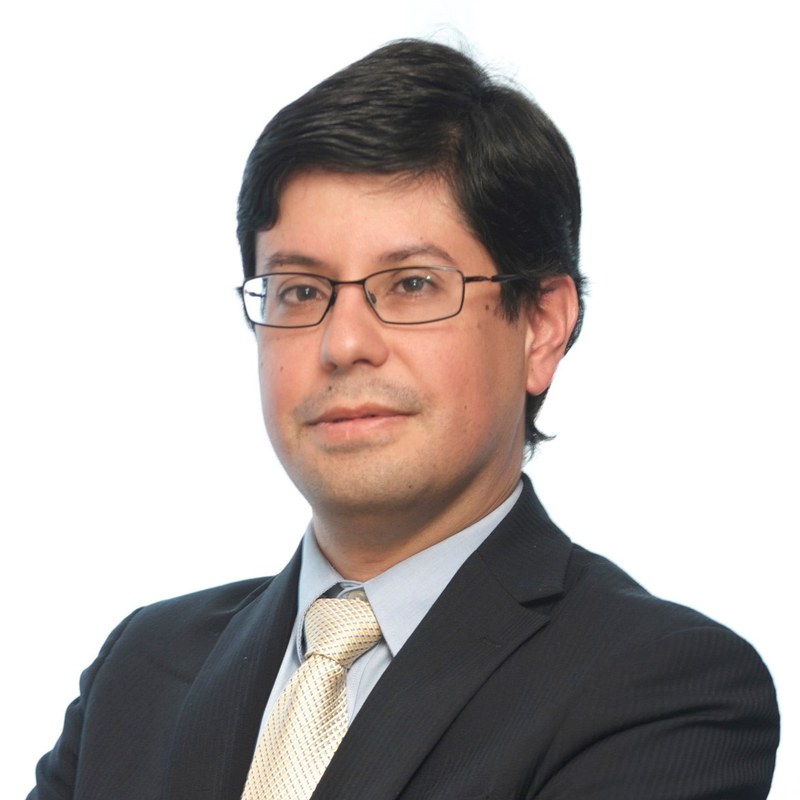
Founded and led by
Public health physician and health informatician with 20 years across clinical practice, research, industry and public health, in the United States and Latin America.
LinkedInORCIDResearchGatePlan, fund and communicate strategies built for each territory.
Know where prevention pays off and who needs care first.
Find the people who need it, help them reach diagnosis and treatment, and stay on it. Including with industry.
A partner for data, methods and the questions in between.
 Type 2 diabetes risk scorecard